
The Corpus of ROMANESQUE SCULPTURE in Britain & Ireland
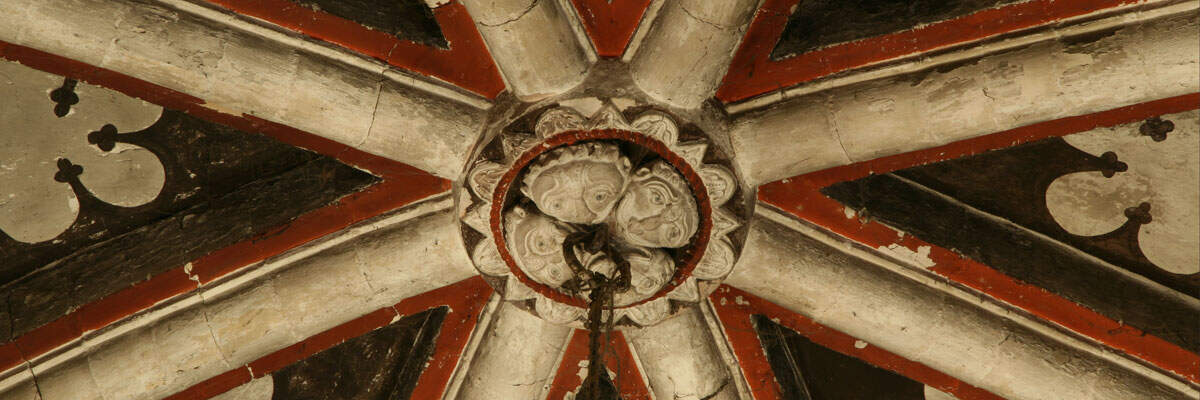
not known (medieval)
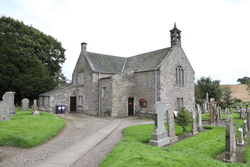
Parish church
The parishes of Albar and Aberlemno were merged in the 17thc. The baptismal font inside the Aberlemno Church belonged to the church or chapel at nearby Aldbar. It was was moved to Aberlemno sometime after 1887 and placed outside the church there. In 1992 the baptismal font was moved inside the church, where it remains.
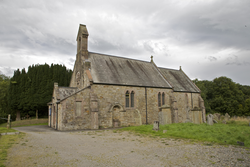
Parish church
On the south exterior of the nave is a blocked, medieval doorway, said to be late-12th century. In 1717, it was declared that there was no maintenance for a curate at Clifton Chapel, or any ecclesiastical services performed there. Between 1736 and 1821, the burial ground had ceased to be used and the building was in a state of disrepair. The church was subsequently restored in 1858 and rebuilt in 1900.
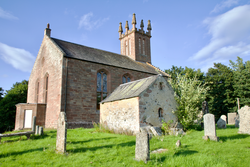
Parish church
Just south of the present church is a small building orientated north-south, the north entrance of which is built using several reused medieval stones. This doorway, which is segmental headed, has two orders and a label. Decorative features include two broadleaf capitals, dogtooth and filleted-roll voussoirs. The parish church at Clunie, in the district of Stormont, was rebuilt in 1840, replacing a church reportedly built “about the time of the Reformation” which had, itself, been repaired in 1788. This earlier church was said to have “neither comeliness nor proportion” (McRitchie, 1793 Statistical Account). It is unknown for certain the original location of the medieval, re-used stones, but it is assumed that they were part of a previous church on the site, although the possibility of their coming from the former castle cannot be discounted.
Parish church, former
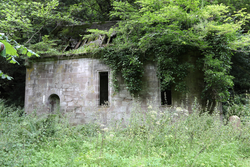
The baptismal font from Aldbar Chapel was moved to Aberlemno sometime after 1887 (see Aberlemno Church for a description and images). The estate of Aldbar (sometimes spelt Auldbar) had been owned by the Cramond family from at least the 13thc, but in the later 16thc it was sold to John Lyon. It subsequently passed through the hands of the Sinclair and Young families, until bought by William Chalmers in 1753. Aldbar Castle was finally destroyed by fire in 1964. In the early 17thc, the parish of Aldbar was joined with Aberlemno, and in 1856 it was noted that the 'old Church' at Aldbar had become ruinous and had been replaced by Mr. Chalmers, under the charge of a Mr. Billings.
Parish church
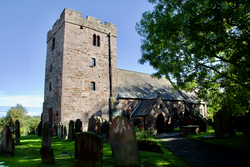
The earliest sections of the church are 12thc. This church appears originally to have consisted of a rectangular nave and rectangular chancel. Carved work from the 12thc. survives on the baptismal font, S doorway, a grave cover and a small chancel window. Various additions were made in the 13thc. and the W tower constructed in the 14thc. Fragments of an early cross were found in excavations carried out in 1880. The N aisle was built in 1882.