
The Corpus of ROMANESQUE SCULPTURE in Britain & Ireland
St Petrock (now)
Parish church
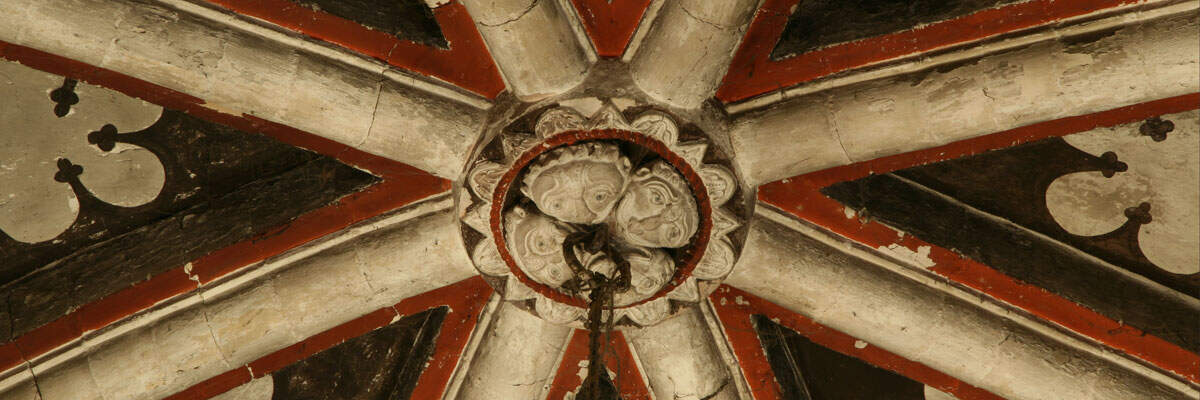
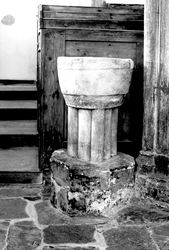
The church originally comprised a 13thc. nave, chancel and W tower, Modifications were carried out to the nave in the 15thc and 16thc and the S aisle, S porch and vestry (abutting the chancel) were added at this time. The font is the only 12thc. feature and is believed to have come from the church of St Martin, Martinhoe, having been found in the garden of the Rector of Martinhoe (Bulner-Thomas 1995, 3).
Parish church
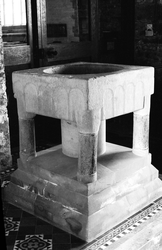
The church comprises chancel with S chapel, nave with N and S aisles and S porch, and a W tower. The tower is 15thc and the N arcade is 14thc but the rest of the church was rebuilt in 1879 by J. F. Gould (Pevsner 1989, 627; Historic England listing: 1333084). Romanesque sculpture is found on the font and on a pillar piscina.
Parish church
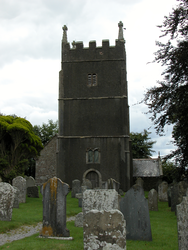
The primarily 15thc and early 16thc church comprises, chancel, nave with N aisle, W tower and S porch. It was restored in 1898 by Tait and Harvey (Pevsner 1989, 509). The fabric is shale, red sandstone, and usually granite on the quoins. The tower is rendered. Romanesque sculpture is found on the font.
Parish church
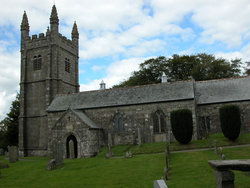
The church comprises chancel, nave with N and S aisles and S porch, and W tower. There is some early 13thc. evidence in the chancel. The S aisle, porch and tower were added in the 15thc. The N aisle and vestry were added when the church was restored in 1889-90 by S. Hooper of Hatherleigh. The fabric of the church is mainly granite blocks, the S vestry and S aisle are mixed granite and shale. The plain font is the only 12thc. feature.
Parish church
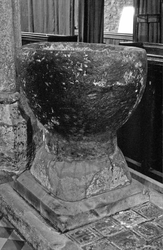
The church comprises chancel, nave with S porch and S aisle, and W tower. The tower is the earliest feature, with its plain, slightly pointed arch, and the chancel may have Early English origins (Historic England listing: 1105096). All other features of the church are Perpendicular. The church was restored in 1887 by Samuel Hooper of Hatherleigh. The only 12thc. feature is the font.
Parish church
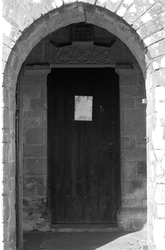
An aisleless church, comprising chancel, nave with S porch, and a low unbuttressed W tower. A pointed lancet in the nave suggests that this could be 13thc, and the chancel and tower are 14thc. The church was extensively restored in 1880–2 (Pevsner; Historic England listing: 1165233). The lintel of the S doorway and the font (outside) are the only carved 12thc. features.